 CUBE ChatShaala – Discussion Summary
Date: 01 February 2026
Session Context: Observation-based reasoning, hypothesis building, and geographical thinking using biological data
The CUBE ChatShaala session held on 01 February 2026 brought together cubists from diverse regions of India to collaboratively examine the phenomenon of mango tree flowering. The discussion was rooted in observational data and hypotheses contributed by students and citizen scientists, highlighting regional variations and seasonal patterns.
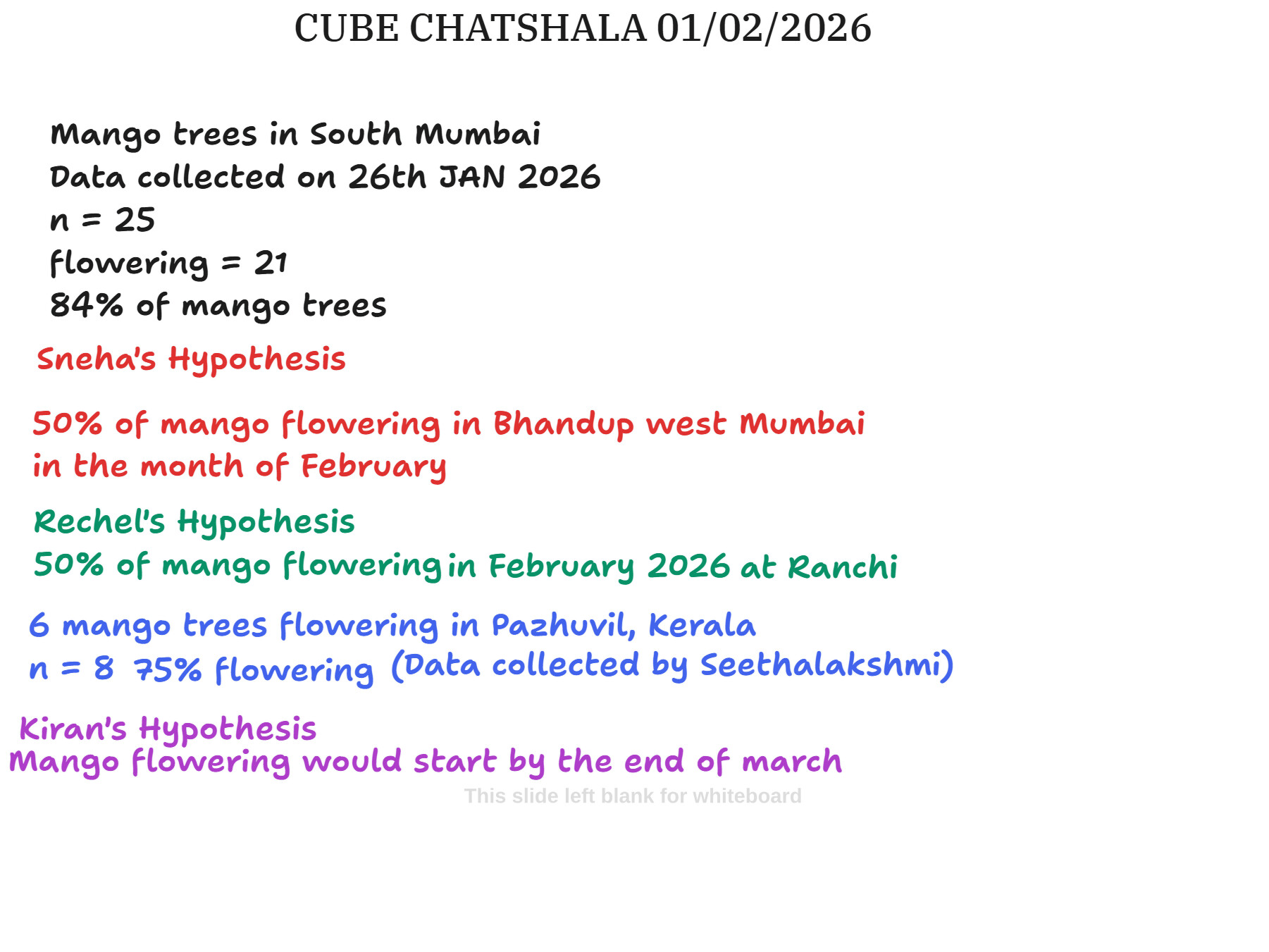
The session began with a report from South Mumbai, where 84% of mango trees (21 out of 25) were observed to be flowering as of 26 January 2026. This prompted a comparison with other regions. Sneha proposed a hypothesis that 50% of mango trees in Bhandup West, Mumbai, would flower in February. Rechel extended this idea to Ranchi, suggesting a similar 50% flowering rate in February 2026. Meanwhile, Seethalakshmi shared data from Pazhuvil, Kerala, where 75% of mango trees (6 out of 8) were already flowering, indicating an earlier onset in southern India. Kiran offered a contrasting hypothesis, predicting that mango flowering would begin only by the end of March.
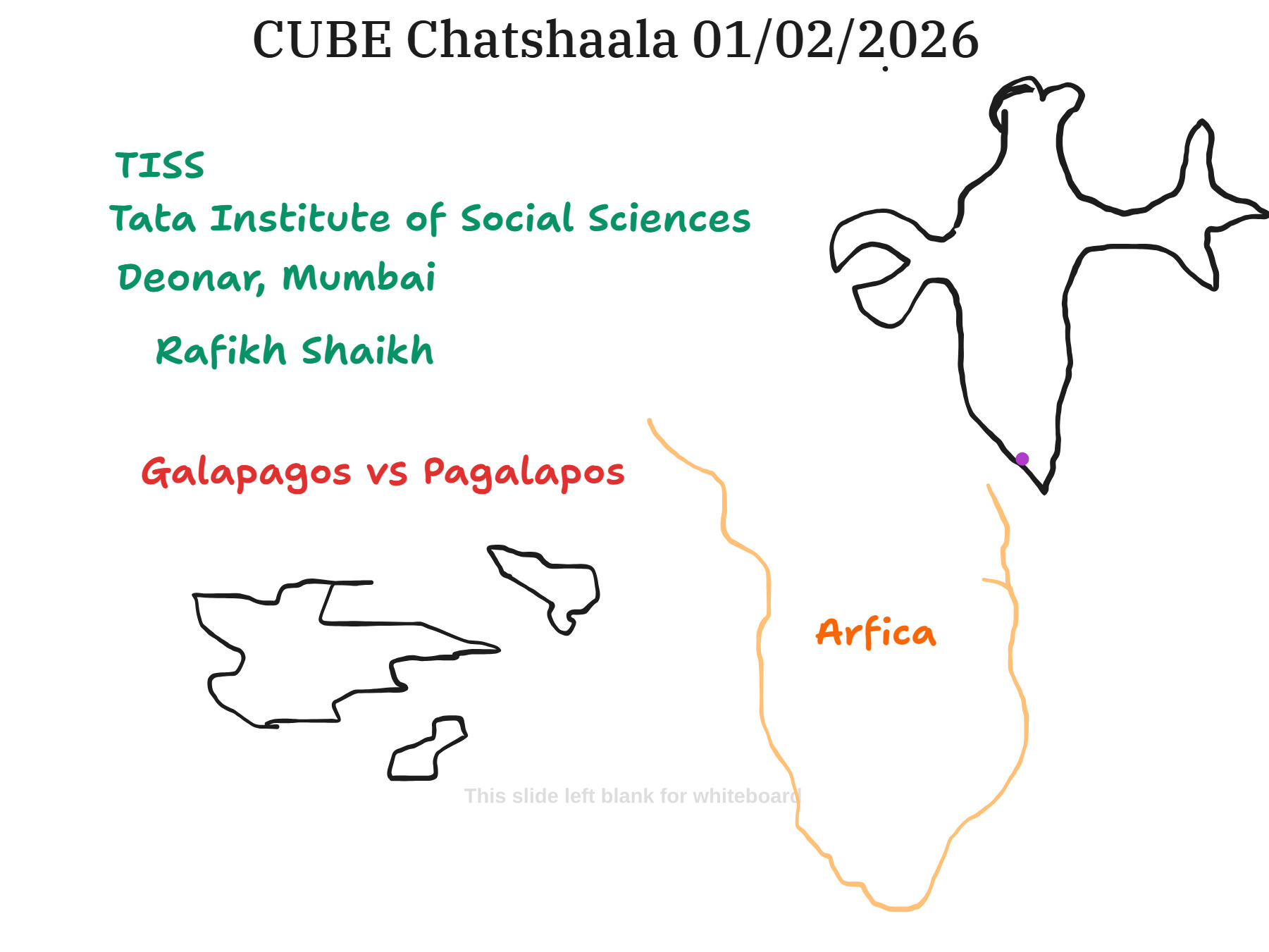
The second part of the session shifted to a more playful yet intellectually stimulating segment titled “Galapagos vs Pagalapos,” led by Rafikh Shaikh from TISS (Tata Institute of Social Sciences). This segment used hand-drawn maps to explore geographic shapes and naming conventions, including a humorous misspelling of “Africa” as “Arfica.” A purple dot marked the southern tip of India, possibly indicating a location of interest or origin of observation.
Together, these discussions encouraged cubists to think critically about ecological patterns, regional climates, and the role of citizen science in generating meaningful data.
 Provocative Questions
-
Why does mango flowering begin earlier in Kerala compared to regions like Ranchi or Mumbai?
-
How might local climate conditions influence the timing and percentage of mango flowering?
-
What methods can be used to validate Sneha and Rechel’s hypotheses about February flowering?
-
Could the purple dot on the southern tip of India represent a key ecological zone for mango flowering?
-
What insights can be drawn from comparing observational data with predictions across different regions?
-
How does playful naming like “Pagalapos” affect engagement and memory in educational settings?
-
What role does citizen science play in shaping ecological understanding at the grassroots level?
 What I Have Learned
Today’s ChatShaala session underscored the power of collaborative inquiry. I learned that mango flowering is not uniform across India—it varies significantly by region and season. Observational data from South Mumbai and Pazhuvil, Kerala, suggest that flowering can begin as early as January in some areas, while others may see it later. The hypotheses presented encouraged me to think about how local climate, geography, and even urbanization might influence these patterns.
The creative segment comparing “Galapagos vs Pagalapos” reminded me that humor and visual storytelling can be powerful tools in education. It made the session more engaging and helped anchor abstract ideas in memorable imagery.
 TINKE Moments (This I Never Knew Earlier)
-
Regional Ecological Variation: I now know that mango flowering can vary dramatically even within the same state, such as between South Mumbai and Bhandup West.
-
Citizen Science as a Data Source: The session highlighted how individuals like Seethalakshmi and Sneha contribute valuable data, reinforcing the credibility of grassroots science.
-
Hypothesis Formation in Real Time: Watching participants form and refine hypotheses based on peer data was a powerful example of scientific thinking in action.
-
Visual Geography as a Learning Tool: The use of hand-drawn maps and playful naming conventions like “Pagalapos” opened up new ways to engage with geographic concepts.
 Gaps and Misconceptions
-
Lack of Temporal Data: While flowering percentages were shared, there was limited information on how these patterns change over time. Longitudinal data would strengthen the hypotheses.
-
Mislabeling and Spelling Errors: The misspelling of “Africa” as “Arfica” could confuse younger participants unless clarified as intentional or humorous.
-
Unclear Significance of the Purple Dot: The dot on the southern tip of India was not explained, leaving its relevance ambiguous.
-
Limited Discussion on Methodology: There was little mention of how flowering was measured—were trees randomly selected, or was there a sampling bias?
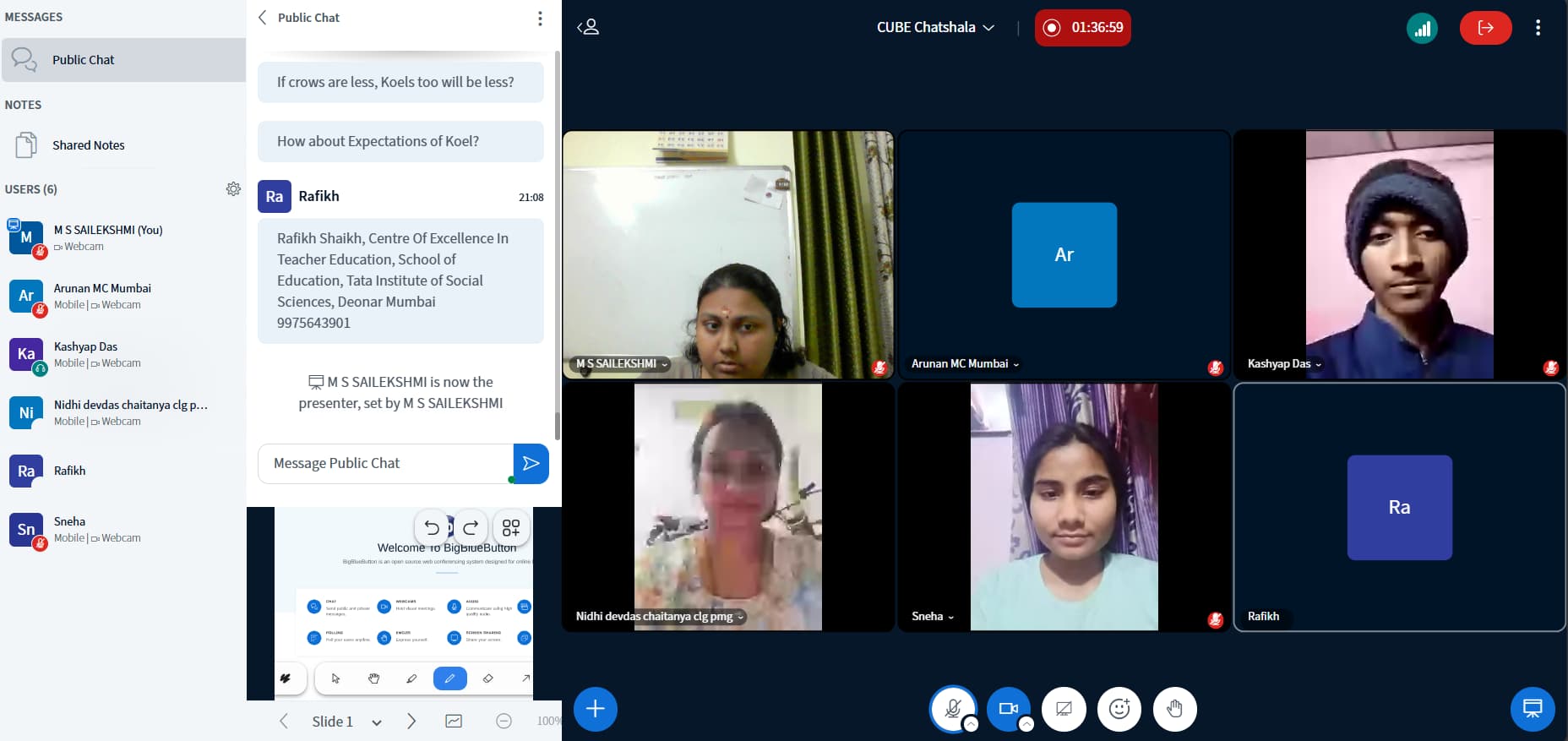
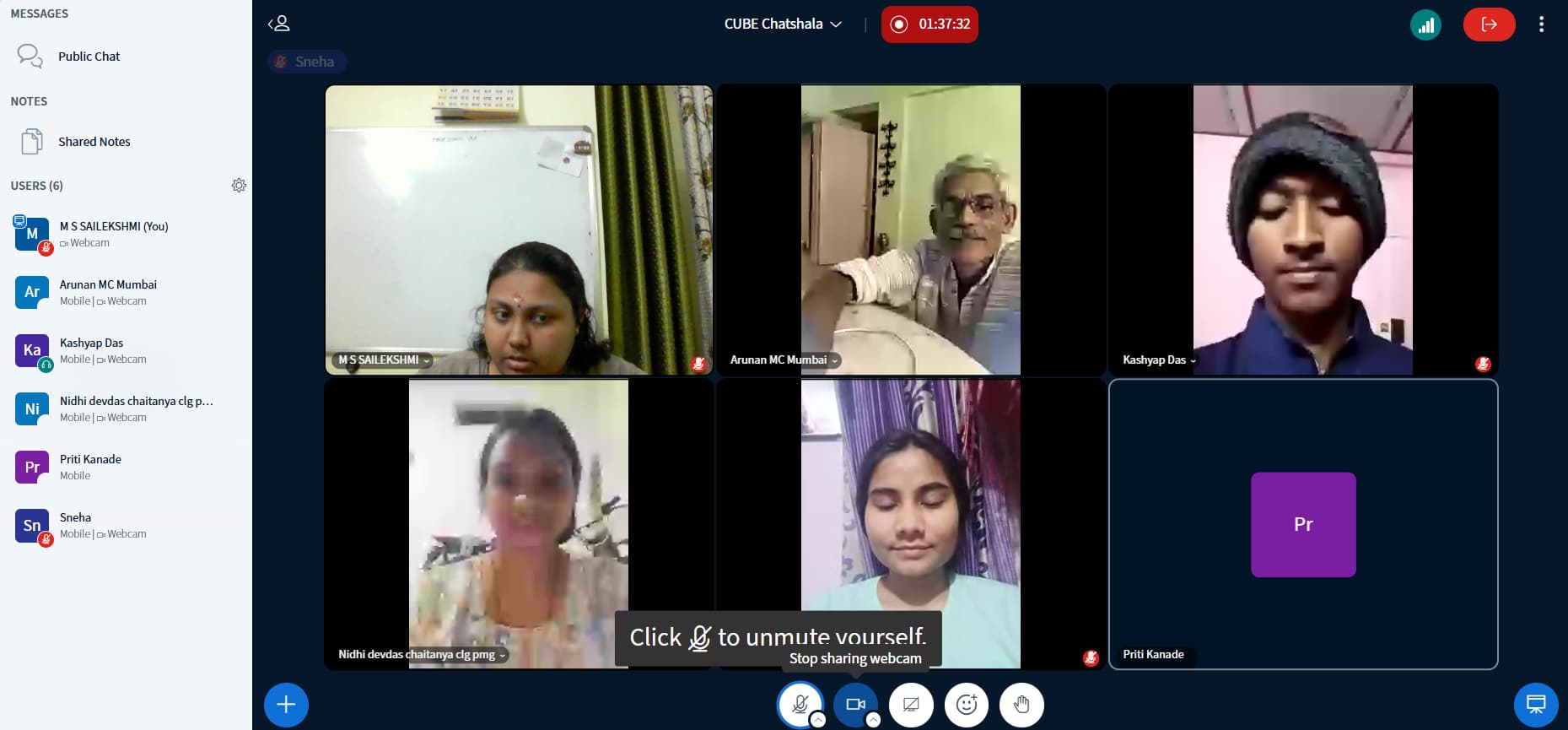
 Photographs during Chatshaala
 Reference